A few weeks ago, we introduced you to Emerge and the role it has played in New Mexico politics. Emerge is a national organization that recruits, trains, and supports Progressive Democrat women running for office. Through campaign training, fundraising assistance, communications coaching, and networking opportunities, it has helped place hundreds of graduates into elected offices throughout New Mexico.
The concern is not simply that Emerge trains candidates. The concern is what happens after those candidates take office.
From Training Candidates to Controlling the Agenda
Over the past several years, Emerge graduates have become a dominant force within New Mexico’s Democratic Party. As their numbers have grown, moderate voices and pro-New Mexico perspectives have increasingly been replaced by lawmakers committed to advancing a national progressive agenda.
Today, Emerge graduates hold positions at nearly every level of New Mexico’s state government and are helping drive many of the policies being debated.
Consider HB 9, the Immigrant Safety Act. This legislation limits cooperation with U.S. Immigration and Customs Enforcement. It has raised concerns among many New Mexicans about public safety, border security, and the potential loss of federal jobs connected to immigration enforcement.
Or consider HB 124, which created the New Americans Division within the Department of Workforce Solutions. While its supporters describe it as a resource for immigrant communities, the question remains of why the state government continues creating taxpayer-funded programs that serve noncitizens while so many New Mexicans struggle with education failures, crime, healthcare shortages, and economic challenges.
These laws are part of a broader agenda that continues moving New Mexico toward greater government dependency and centralized control. Socialism.
Where Do These Ideas Come From?
Policies like these do not appear out of thin air. Non-governmental organizations (NGOs), such as the Party for Socialism and Liberation (PSL), help develop policy ideas and legislation that are then carried by Emerge-trained legislators and signed into law by the governor.
The model is simple: activist groups draft the policy and pay their advocates to support it, progressive legislators advance it, and the governor signs it. The result is a coordinated effort that continues moving New Mexico toward a more government-centered, socialist agenda. Ironically, while Emerge and its allies frequently criticize “dark money” in politics, critics argue they rarely discuss the foreign and domestic funding networks supporting their own efforts. Look at the millions of dollars that flowed into Deb Haaland’s campaign from out of state in support of her as an Emerge candidate for governor of New Mexico
Universal Childcare: A Case Study in Government Expansion
One of the clearest examples of this philosophy is the governor’s push for universal childcare. The program provides no-cost childcare regardless of income level or citizenship status and is projected to have skyrocketing costs for taxpayers. The legislature funded it with $160 million in 2026 alone, and officials have already indicated that it is likely not enough.
At the same time, the state lacks enough childcare providers and available slots to meet demand, leading to a push for rapid expansion of new facilities. That raises an important question: can the state effectively license, monitor, and oversee this growth while ensuring the safety and well-being of New Mexico’s children?
Why This Matters
The policies shaping New Mexico today did not happen organically.
They are the result of years of candidate recruitment, activist organizing, policy development, and political coordination. Understanding those connections is critical for anyone who wants to understand why New Mexico continues moving in its current direction.
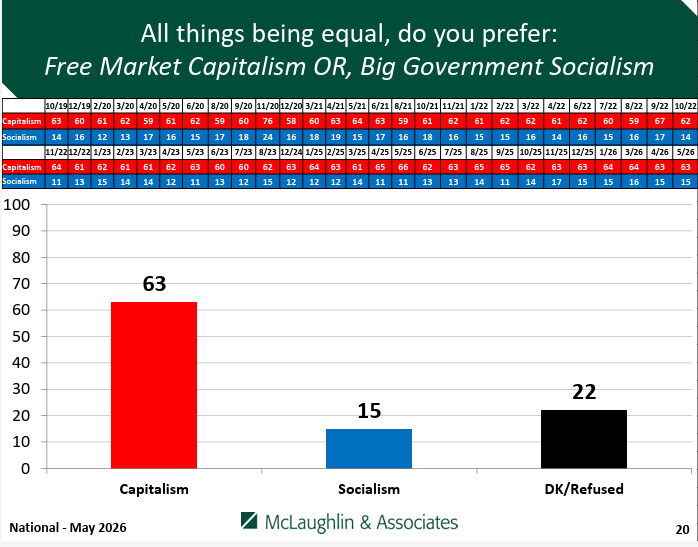
We know that when people are given a clear choice, they consistently favor free market capitalism over socialism. That raises an important question: if these policies are so popular, why do they require a coordinated network of activist organizations, political operatives, and government officials to advance them? Many New Mexicans believe these ideas are being imposed from the top down rather than growing from the priorities of everyday citizens.
Consider this nationwide survey of U.S. citizens regarding their preference or Free Market Capitalism or Socialism:
Regardless of where you stand politically, every New Mexican benefits from understanding who is influencing public policy and how those decisions affect our families, communities, and future.
Learn More
Want to learn more about the organizations and political networks influencing New Mexico policy? Watch this podcast discussion: